
If you’re experiencing persistent shoulder pain and stiffness that’s limiting your arm movement, you might be dealing with frozen shoulder. Fortunately, there are effective treatment options available at our osteopathic clinic.
What is Frozen Shoulder?
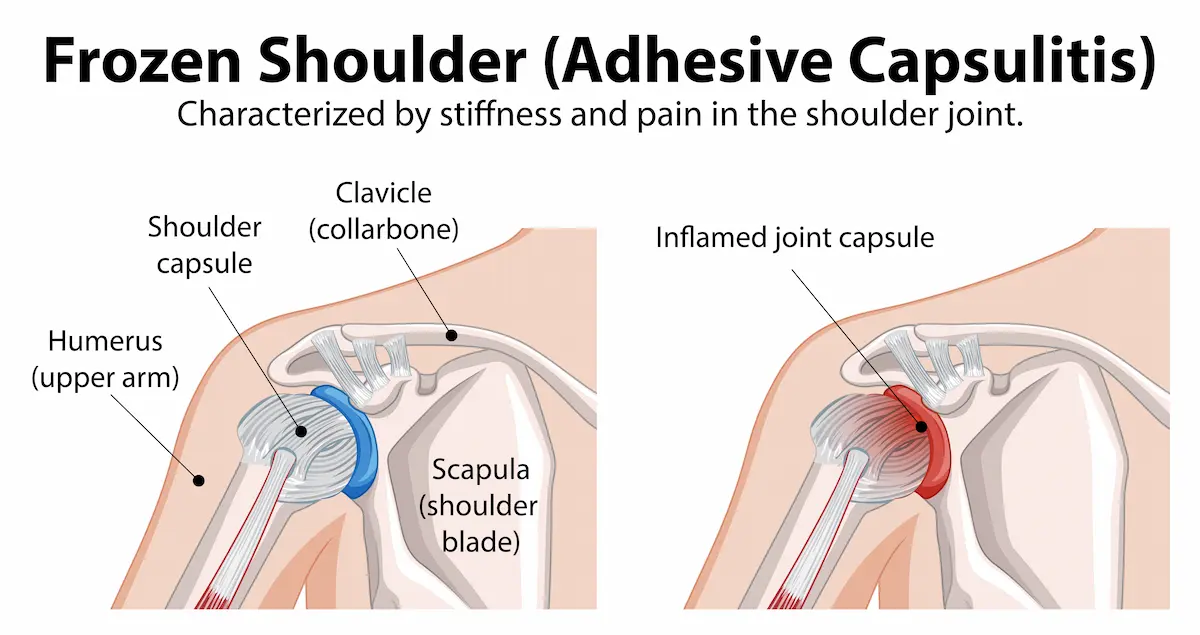
Frozen shoulder, also known as adhesive capsulitis, is a condition characterized by stiffness and pain in your shoulder joint. The 1 shoulder capsule, which surrounds the joint, thickens and tightens, restricting movement. It typically develops slowly and in three stages:
How Frozen Shoulder Develops
- Freezing Stage: Gradual onset of pain, with increasing stiffness.
- Frozen Stage: Pain may lessen, but stiffness worsens, significantly limiting range of motion.
- Thawing Stage: Shoulder motion slowly improves.
This process can take anywhere from a year to three years, making early and effective intervention crucial.
Key Benefits of Osteopathy for Frozen Shoulder
Osteopathy offers a holistic approach to frozen shoulder treatment, focusing on restoring function and reducing pain through gentle manual techniques. Some of the key benefits include:
Pain Relief
Osteopathic manipulation for shoulder pain] aims to reduce pain by addressing joint restrictions and muscle tension.
Improved Shoulder Mobility
Osteopathic treatment for adhesive capsulitis works to restore shoulder mobility restoration by gently stretching and mobilizing the shoulder joint.
Reduced Stiffness
Soft tissue therapy for frozen shoulder, including myofascial release for shoulder stiffness, helps to release tight muscles and tissues surrounding the shoulder.
Enhanced Function
By addressing the root cause of the restriction, osteopathy helps improve overall shoulder function and allows you to return to your normal activities.
Non-Surgical Approach
Osteopathy offers a frozen shoulder treatment without surgery option, focusing on natural healing and restoring the body’s own mechanics.
Who Can Benefit Most from Osteopathic Treatment for Frozen Shoulder?
- People in the early stages of adhesive capsulitis management, to prevent the condition from worsening.
- Those in the “frozen” stage, seeking to reduce pain and improve range of motion.
- Individuals in the “thawing” stage, looking to accelerate their recovery and regain full function.
Other Shoulder Conditions and Special Cases
- Those seeking a natural treatment option for adhesive capsulitis and avoiding invasive procedures.
- Individuals experiencing chronic shoulder pain relief related to frozen shoulder.
- Even those with postural imbalances contributing to their shoulder issues can benefit from postural correction for frozen shoulder techniques.
- Gentle manual therapy for chronic shoulder stiffness can be particularly helpful for those with long-standing restrictions.
How to Prepare for Your First Session
If you’re considering osteopathic treatment for your frozen shoulder, here are some helpful tips to prepare for your first session:
1. Bring Relevant Medical History
Share any previous diagnoses, imaging results (X-rays, MRIs), and medications you’re taking.
2. Wear Comfortable Clothing
Opt for loose-fitting clothes that allow for easy movement and access to your shoulder.
3. Be Prepared to Discuss Your Symptoms
Be ready to describe your pain levels, the extent of your stiffness, and how it affects your daily life.
4. Ask Questions
Don’t hesitate to ask your osteopath about their approach, the expected duration of treatment, and any self-care exercises you can do at home.
5. Relax and Be Open to Treatment
Osteopathic techniques are generally gentle, so try to relax and allow your osteopath to guide you through the process.
What to Expect During and After Your Osteopathic Treatment
During
- Assessment (10 min): osteopath will perform a thorough examination, assessing your range of motion, posture, and the surrounding soft tissues.
- Manual Therapy (20 – 30 min): a variety of hands-on techniques, including osteopathic manipulation for shoulder pain, myofascial release for shoulder stiffness, and gentle stretching for frozen shoulder.
- Provide Home Exercise Recommendations: Your osteopath will likely recommend specific stretches and exercises to do at home to support your treatment and promote healing.
After
- Temporary Soreness: It’s common to feel some mild soreness or fatigue after treatment, similar to how you feel after a workout.
- Improved Mobility: You may notice some immediate improvement in your range of motion, although significant changes usually occur over a series of sessions.
- Reduced Pain: Pain relief can vary, but many people experience a reduction in pain after osteopathic treatment.
Self-Care Tips Between Sessions
- Pendular swings, wall-crawls, and cane-assisted external rotation—3 × daily
- Anti-inflammatory nutrition: omega-3 fatty acids, turmeric, and plenty of colourful vegetables
- Sleep on the non-affected side hugging a pillow to keep the shoulder propped in neutral
- Manage blood-sugar levels diligently if you have diabetes
An excellent way to help your frozen shoulder recovery is the Wall Press stretch, which increases flexibility of the shoulders, flexibility of the spine, and is often part of osteopathic treatment. Discover more here: wall press stretching exercise
Expert Insights & Scientific Support
Affecting 2 – 5 % of adults—mostly women aged 40 – 60 , it causes progressive stiffness, aching, and months of lost productivity. Early, targeted care prevents years of discomfort and costly interventions.
Research and expert consensus support the effectiveness of osteopathic treatment for frozen shoulder. A study published in the Journal of Manual & Manipulative Therapy found that osteopathic manipulation significantly improved pain and range of motion in patients with adhesive capsulitis .
While osteopathy vs physiotherapy for frozen shoulder approaches can both be beneficial, osteopathy emphasizes a holistic view, considering the interconnectedness of the body’s systems.
Frozen Shoulder Treatment Near Me
Don’t let frozen shoulder limit your life. At Body & Mind Osteopathic Clinic in Toronto and Vaughan, our experienced osteopaths and massage therapists provide compassionate and effective care to help you regain pain-free movement and restore your shoulder function.
Schedule a consultation with osteopath Vadzim Siniauski today. He would be happy to meet with you and discuss how osteopathic treatment can benefit you!
Frequently Asked Questions
How do I fix my frozen shoulder?
Osteopathic treatment, combined with home exercises, is a highly effective way to address frozen shoulder. Frozen shoulder treatment without surgery focuses on restoring joint mobility and reducing pain through manual techniques and gentle stretching.
Why is frozen shoulder more common in females?
While the exact reasons are not fully understood, hormonal changes, particularly around menopause, may play a role in the increased prevalence of frozen shoulder in women.
Is heat or ice better for frozen shoulder?
Both heat and ice can be beneficial. Ice is generally recommended during the acute (freezing) stage to reduce inflammation, while heat can help to relax muscles and improve blood flow in the later stages. Your osteopath can advise you on the best approach for your specific situation.
How long does osteopathic treatment take for frozen shoulder?
he duration of treatment varies depending on the severity and stage of your condition. It typically involves a series of sessions over several weeks or months.
Does osteopathy replace physiotherapy?
They complement each other. Osteopathy focuses on manual correction of joint and fascial restrictions; physiotherapy builds strength and endurance. Many patients choose both.
What are the best manual therapy techniques for frozen shoulder?
Effective frozen shoulder osteopathic techniques include joint mobilization, myofascial release, muscle energy techniques (MET), and gentle stretching.